Posts tonen met het label books. Alle posts tonen

donderdag 11 februari 2016

Countries without borders


“For an Israel without borders”,  such was the chotspeous title of a book by the Dominican Lucas Grollenberg in 1970. In it he laments the fate undergone by the Palestinians by the creation of the state of Israel, and that’s legitimate of course. The chotspe lies in the fact that, barely twenty-five years after the bloodiest attack ever on the Jewish people, the author calls for conceiving of Judaism as a purely spiritual content that does not need a physical component, let alone borders. That’s quite impertinent if you know how Jews were threatened in their purely physical existence. And that precisely the lack of border security has become fatal to many of them at that time.

The utopia of borderlessness as an ideal is nevertheless very popular. The historian Henri Beunders calls it an important part of the current zeitgeist which cherishes the idea that all people can freely travel around the earth. That’s good for the economy, for communication between people and for the exchange between cultures.

Beunders views the emergence of the open borders movement as a relatively modern phenomenon, based on the idea that boundaries are unfair to the poor and that they are economically inefficient and counterproductive. In this modern dream of ‘the sky is the limit’, according to Beunders, we lost the sense of equivocalness of boundaries and started thinking in terms of borderlessness.

We pay for it now, Beunders says, and therefore we frantically start to reestablish boundaries and fences. That change can go fast, just look at our politicians who, still in October, explained passionately that you cannot stop asylum seekers, but now present a plan for strong border control.

I do agree with Beunders that Europe is chained to an ideology of boundlessness of which now it discovers the utopian side. But I do not share his analysis that this is a zeitgeist phenomenon – so something relatively modern. The roots of this absolute universal orientation go back much further, namely to a deep-rooted universalist orientation of Christianity. Already for the Apostle Paul the sky was the limit, and eliminating all differences between Jew and Greek, and other nations, his stated goal. In that respect Grollenberg stands in a tradition.

No wonder Christianity brought, along with civilization, also a lot of violence. Because generally people are rather attached to their own identity and its connected borders, and they don’t give up that without a fight in exchange for a universalist ideal.

Apart from violent, the ideal now appears also to be a bit too utopian. The open borders ideal encounters poverty, wars and refugees in the rest of the world, and in its propagated shape appears to be unsustainable. The question at this time, given our cultural heritage, is how fast we will be able to switch.

woensdag 4 november 2015

Wittgenstein as Talmudist


It is not obvious to bring Wittgenstein in connection with Talmudic thinking. He himself would probably have been the first to object because he did not like to be reminded of his Jewish ancestry. And also because in Wittgenstein’s own eyes clear thinking was his trademark while Talmudic reasoning, especially in his time, passed for obscure and incomprehensible. He wanted to have nothing to do with it.

But there is more to say about Wittgenstein. His initial striving for pure, linear logic and unequivocal truth at some point gave way to the belief that multiple contextual logics could coexist in plurality. ‘The’ truth was no longer his goal, rather clarity in the practical use of words and language. This change in Wittgenstein’s thinking is the cause of a fairly common distinction made between an early and a later Wittgenstein.

The said change of direction in his philosophy does not please everyone and some are even inclined to describe Wittgenstein’s late philosophy as obscure and incomprehensible. For example, Bertrand Russell – a big fan of the early Wittgenstein – believed the later Wittgenstein simply gave up the philosophical quest for true knowledge and thus betrayed  the duty of a philosopher. According to Ernest Gellner, the late Wittgenstein leads to relativism or conservatism.

Others, such as John Austin and Gilbert Ryle, enthusiastically follow in Wittgenstein’s footsteps. In the Netherlands, Bert Keizer praises him for the revolutionary break with Plato that Wittgenstein performs.

I belong to the second group. Although I have some reservations when it comes to a possible conservative effect of Wittgenstein’s work, on the whole I find it refreshing and relaxing. The remarkable thing is that my appreciation relates to a number of elements which I also find and appreciate in the style of the Talmud. Therefore for me Wittgenstein’s thinking is closer to Talmudic thought than is recognized in general, and than he himself would have liked.

What do I have in mind when I say that? What are those possibly parallel elements? I think of two things: a pragmatic interest in finding passable paths and  his abandon of the notion of ‘the’ truth.

For the later Wittgenstein the criterion for determining the ‘correct view’ is whether we have something to go on with again. He wonders what it takes to achieve that, and how to act according to what the situation asks from us. So, Wittgenstein quite deliberately does not invoke universal truth as a criterion for action, his criterion is pragmatic in nature.

Do not ask what a thing is, so is his motto, but look how we speak about them and act with them. In doing so he arrives at contextual meanings of language, the meaning of a word is its use. “To know how to go on” is what it’s all about. What is right depends on the game you are playing.

Take for example the public debate about smoking. Thinkers in the line of the later Wittgenstein don’t care much about the scientific truth in this area, ie about the question whether there is conclusive evidence that smoking produces health damage, and if so how exactly.

What these thinkers dó wonder about is what is socially accepted as a fact, on the basis of which we actually (can) act. Such as: that we have seen enough to assume a link between smoking and lung cancer, and are inclined to put some responsibility on tobacco manufacturers. And that in the course of time other accents can be laid. Thus the conversation about smoking becomes more of a practical-normative question than a truth issue.

In the Talmud discussions can proceed in the same way. Also for Talmudic statements a central criterion is the question of whether a passable path emerges. Not for nothing the word ‘halacha’ (the whole of rabbinic regulations) is derived from the verb ‘to go’. And if a collectively passable path is at stake, then a set of guiding rules and etiquette may be more convenient than the availability of a solid truth.

An example of Talmudic reasoning is the treatment of the question whether a given furnace is kosher or not. Rabbi Eliezer, for his answer to that question, relies on divine truth, and emphasizing that, he manages to move God to all kinds of supernatural signs: “If I’m right”,  Rabbi Eliezer says, “this tree will now be uprooted and that river will flow in the opposite direction”, and indeed they do. But the other rabbis in the meeting appear not to be impressed by that truth. “We pay no attention to a heavenly voice, for long ago You, Eternal One, at Mount Sinai have written in the Torah: Follow the majority”. So, just decide democratically, without divine intervention.

It is remarkable that such a way of reasoning, both in the case of the Talmud and in the case of the Philosophical Investigations (from the later Wittgenstein) has an effect on the style in which the books have been written. Both have a capricious character in which reasonings take place through associations rather than through a strictly logical, linear structure. Furthermore, both works pay a lot of attention to individual, specific situations and cases. In Wittgenstein this is a deliberately chosen style: he speaks judgmental about the ‘contempt for the individual case’ and he fights the human tendency to generalize. “I'll teach you differences”, Wittgenstein says, an endeavor that can be also attributed to the Talmud.

An indelible difference is that in the Talmud the possibility of reduction of sentences to a Biblical verse is required. It presses the associative way of thinking of the rabbis to great heights, but the extent of associated squirming and wriggling would undoubtedly greatly go against the grain with Wittgenstein.

Remains that both Wittgenstein and the Talmud with their organizing work aim at clarifying lived human practices. Who knows, if Wittgenstein had not been bothered by time-bound prejudices against the Talmud, he would perhaps have recognized the parallels.

Also see The portable homeland and I-lit

donderdag 29 oktober 2015

I-lit


Recently Naema Tahir called Die Welt von Gestern by Stefan Zweig one of the finest books she had read. For me actually the same holds true. It is 35 years since I read it, but its instructiveness and penetrating enjoyment are still standing sharp in my mind.

However, I completely disagree with the thoughts that she then connects to her appreciation of the book. She believes that Zweig reached that grand effect because he stays on the outside: he observes his surroundings and styles his findings in a masterly way. He does not speak about himself and this controlled distance creates depth and art.

She opposes that to the tendency of modern literature to expand extensively on the inner life of the author himself or herself, including physical and sexual aspects of private life. She calls that ‘I-lit’, with Karl Ove Knausgård and Jonathan Littell as its contemporary exponents, and she abhors it. Firstly because she finds the many sexual details repulsive. But in the second place, as she says, because someone else’s inner life is not relevant to a reader. And, as I suspect based on the tone of the piece, in the third place because of the old moralistic reason that attention to one’s own inner life is selfish.

Tahirs first argument is imaginable for me: I think too it’s often not really pleasant to, for example, get served the details of other people’s sex lives. But with her second argument, namely that it would not be relevant, I do not agree. For that reason, I also heartily disagree with her normative, condemning rejection of I-centredness.

I’m afraid that Tahirs considerations are derived a bit too much from the world of yesterday where she let herself be carried away by Zweig. That world of external control, elegant but compelling objectivity, distance and styling is completely outdated, so is my conviction. It relies too heavily on elements that are irretrievably gone, such as order thinking and the assumption of a cosmic harmony that we can bring near through control and, if necessary, by use of a little violence. In short, on an essentially Platonic conception of the world.

This underlying worldview over the past century lost its credibility. For the West, from a societal perspective, to this day the now eighty-year-old corruption of our political order by Nazism and Stalinism revealed a grim turning point. According to many experts the desire for objective order and control, deeply rooted in Western thinking, made possible those totalitarian regimes.

At the same time psychoanalysis and other humanities have increased our understanding of ourselves and our often murky motives so overwhelmingly, that Zweig’s polished gentleman existence has become unattainable for us for good. Indeed, we not even consider it to be desirable because of its unrealistic character. There is for us no choice but to descend into our troubled lives, so our literature does so as well.

And yes, that can bring up all sorts of revelations that Tahir abhors such as the conclusion  by a recent biographer that Zweig which was an exhibitionist. “I do not want to hear that”,  she exclaims, “It's a kind of defilement.” It obscures beauty and it is irrelevant.

I would say on the contrary: the very fact that Tahir’s lofty image can be brought down by the disclosure makes the disclosure relevant. Frankly, I think the focus on the inner life in all its aspects, not just the sublime, is progress. Not that I’m going to read Knausgård, but I appreciate the tendency that modern people try as best as possible to deal with their not so lofty but every-day physical, sexual and spiritual needs. And I tend to see recognition of the dark diversity of human strivings as a gain. Eventually it is a better means of averting social chaos than the controlling action of an outward ideal of civilization.

After all, how else do we ever get out of that often sterile, objectifying, communicatively poor atmosphere at our offices, schools and universities, than by systematically scrutinizing ourselves and expressing ourselves as subjects? To dismiss that as self-centered I would call old-fashionedly normative. I would like to cite Wittgenstein in this regard, in conversation with Friedrich Waismann: “At the end of my lecture on ethics I spoke in the first person: I think that this is something very essential. Here there is nothing to be stated any more; all I can do is to step forth as an individual and speak in the first person.”

La Belle Epoque is definitely in the past. But that loss can be very livable, and indeed the more so as our inner life is more involved. That much faith in a certain order I still have.

Also see Escape

donderdag 26 maart 2015

Wiping


Recently the book Isabella. The Warrior Queen appeared, written by Kirstin Downey, about Queen Isabella of Spain. She was the wife of King Ferdinand and together they at the end of the fifteenth century managed to expulse the Muslims and Jews from Spain.

The book was recently discussed by Nina Weijers. In doing so she made use of a certain cliché that gradually has become implausible, and which therefore I think it is better not to use any longer.

I refer to the following passage (about Isabella): “Although she was fond of the New Testament, her mentality was more Old Testament in nature. As Downey concludes: ‘She was always more inclined to claim an eye for an eye than to turn the other cheeck.’”.

I object to the misguided nature of a suchlike passage, including the presented quote. Because what happens in the passage is paradoxical:
- It starts uncritically from a specific cliché, namely, the association of the New Testament with love and rejection of the principle of an eye for an eye.
- Then it notes that a supporter of the New Testament simply employs the principle of an eye for an eye.
- In the last sentence it restores the association of the New Testament with  turning the other cheek.

I do object to this because - in spite of the factual reality - the labels of New Testament and Old Testament remain intact: Old Testament = violence, New Testament = love.

This is correct to the extent to which the New Testament is another book with a different content. But I think that, once a book has gone along for thousands of years, our associations must be determined not only by the content. The actual intercourse with it by authority figures and its cultural integration must weigh in the associations we attach to them. From that point of view Isabella’s performance would well be exemplary of the action of many other New Testament lovers. If so then that, in my opinion, should affect the automatic associations we attribute to the New Testament.

My suggestion would therefore be to permanently wipe from our minds those clichéd associations. Because the clichés continue to produce misunderstandings and subcutaneously keep playing their dark role. When erasing them we can let us help by recognizing the reality of nuclear deterrence strategy of the Christian West, which has been based for decades on the principle: if you’ll hit, I will hit you first. Or by the position taken by leaders from the New Testament Eastern European culture as Putin and Poroshenko. The latter recently told us: “Do not think that we turn the other cheek when we are attacked”.

Maybe there is not much difference between the Old and New Testament. And is the real difference where people start murdering or beheading out of the blue, rather than in people who use rules of equal retribution for their own defense. The latter may be quite human. Turning the other cheek seems to me rarely an option anyway.

Also see Holy fire and Landmarks

donderdag 15 januari 2015

Sacred Imagination


As long as I hear people use the word ‘imagination’, an exalted tone is connected with it. Imagination stands on a pedestal. But, I asked myself many times, why is that?

It may be because imagination helps people – writers and readers – to, if only temporarily,  escape the unruly reality and to experience a rush of oblivion. Publishers seem to aim at that effect when promoting new books, as happens now with a new book by Leon de Winter that is touted as “a dance on the high wire of imagination”. And writer Adri van der Heijden once told that in his youth he was so bored at home that he fled in imagination.

Nice that it exists that way, but a second explanation appeals to me more. It associates  imagination with nurturing and enhancing the inner human space. In the same vein as philosophy can broaden your horizons by presenting new ideas, literary imagination can produce that effect by the portrayal of emotions and psychological complications.

But what I think is less appealing of this valuation of imagination is that it often in one go is linked to a useful side effect of imagination: the latter would help improve interpersonal communication because people learn better to empathize in each other’s situation. Even, some philosophers like Martha Nussbaum and Richard Rorty say, in order to really improve the world, you should employ literature.

I do not like that argument. Firstly, because between the study room, where imagination unfolds, and reality in a disturbing way light remains. Something of irritation thereabout was voiced lately by critic Rob Schouten in his cautious appreciation of novelist Arnon Grunberg. Who refuses to reassure us in his novels, and his reversal of the feel-good-Swiss-Life-sentiment does not leave Schouten unscathed. “His work has to do more with human trauma than with sacred imagination”.

Secondly, and related, I do not like the idea of world-improving manufacturability that is expressed by Nussbaum’s and Rorty’s plead for instrumental imagination. Of course, one can never be against broadening horizons in the philosophical or literary field, that is only too right. But the underlying idea is wrong, because it argues that if only you think and feel broadly enough, you can eliminate misperceptions. And that thought is counterproductive in an insidious way.

Indeed, the range of human thoughts and emotions is infinitely large. To think that all that can in advance be made to fit in your imaginative world, by definition does not reflect the reality of people and is therefore, in its pretensions, potentially violent. Because how will a self-conscious large imagination deal with a reality that yet appears to dwell outside of it? Something múst be wrong with that.

And this last conclusion I would not draw too quickly. But that means that, conversely, there is something wrong, not so much with imagination itself, but with the pretensions of imagination. We will, in spite of the pretensions of Nussbaum and Rorty, keep being surprised time and again by the reactions of others, however big our imagination is. Because the other is different, by definition.

All things considered, we need to know – or, if you prefer, to imagine – only one from the whole range of human emotions: grief. Because then you will usually be able to recognize the situations in which you have hurt someone else, notwithstanding all your imagination.

donderdag 27 november 2014

Incentives


I do know Israel - for travel - and that pleased me. I do not know the country as a resident, and I wonder how I would like that.

At this time that question is triggered by my rereading passages from the book My promised land by Ari Shavit about which I previously reported. Especially tickling are the passages referring to the Israeli food giant Strauss, by the twinkling intensity of Israeli society that resounds in it.

Shavit: “Israel is a country that is quickly excited; Israelis therefore have need for more and more incentives. The Strauss-team understood that this also applies to the taste of food. They realized that the Israeli savory snacks had to be much saltier than American snacks and confectionery much sweeter than the European. Chocolate was to be much more chocolate-esque and vanilla much more vanilla-esque. Nuances in Israel were not appreciated: everything had to be powerful and extreme and caress the palate with strong aromas. For an example, the Israeli Milky contained twice as much cream as the German example. But the Israelis do not want just more, they also want continuously something new. They are quickly tired of something. For that reason, Strauss replaces its products much faster than its European sister companies”.

That this lust for excitement does not necessarily have to lead to flatness and insipidity, appears from the development of Israeli dance. Which also is largely driven by basic physical stimuli, but at the same time manages to achieve a high level of artistry. Israeli dance is not so much focused on beauty, it is more about gouge: impulses from the body, and bare feet instead of spitze.

Intuition and feeling, these are according to experts the basis of Israeli dance. The drive of the dancers, their great technique, the inner need that expresses the choreography – they are constants in Israel’s young dance history, which make Israeli dance at present internationally into a success story.

The choreographer Guy Behar explains the strength of this dance tradition from the social situation in Israel. “The context in which we operate is dynamic, turbulent”, he says. “You never know what will happen. Every moment the situation can change. If you have something to say, you should say it now. That inner necessity and immediacy can be seen in almost all the work”.

Yes, this artistic and communicative dynamics definitely does have something stimulating and that appeals to me. But at the same time I would find all that a bit too raw. Furthermore, I doubt whether I’m not too stress-sensitive to live permanently in a war situation. I actually think I cannot manage that. Rather, to me applies what the former CIDI Chairman John Manheim once said of himself: that his nervous system did not allow him to live in Israel.

But as great a problem for me would be that the provocative dynamics of cultural and economic life in Israel stands out quite shrill against the lukewarmness and indifference exhibited by the majority of the Israeli population when it comes to a peace settlement and the treatment of the Palestinians. An attitude that so perfectly, and not coincidentally, is embodied by the absolute-non-dancer Netanyahu. Actually incomprehensible.


woensdag 5 november 2014

Levinas and Kahneman


The psychologist Daniel Kahneman had just graduated when in 1955 as a conscript into the Israeli army he was commissioned to set up a new interview system for the entire army. The interviews were meant to produce a picture of the recruits and to judge whether these were suited for the officer training.

The existing system did no longer satisfy, because it gave the interviewers freedom to do what they found most interesting, which was to learn about the dynamics of the spiritual life of the interviewee. Ánd because the overall assessment of the recruit by the interviewers was decisive for the final decision, while scientific evidence indicated that such assessments were unreliable.

Kahneman attacked both objections. Instead of free interviews he opted for standardized, factual questions. And instead of interview summaries he preferred statistical summaries of seperately assessed characteristics of the recruit. The final score for fitness for combat tasks would be calculated using a standard formula, without further interference by the interviewers.

In his book Thinking, Fast and Slow Kahneman justifies his choices as follows. “By focusing on standardized, factual questions I hoped to fight the halo effect, whereby favorable first impressions affect judgments later on. I told the interviewers that they did not have to worry about the future adjustment of the recruit to life in military service. Their only task was to get the relevant facts about their past and to use that information to score each personality dimension. ‘It is your job to provide reliable data’, I told them. Just leave the predictive validity to me’, by which I was referring to the formula that I would draft to combine their specific scores”.

Then he continues: “Among the interviewers an uprising almost broke out. These intelligent young people found it hard to accept that they were instructed by someone who was barely older than they were, to turn off their intuition and to concentrate fully on dull factual questions. One of them protested by saying: “You make robots of us!” That’s why I came up with a compromise. “If you do the interview exactly as I have said, then I will satisfy  your desire: then close your eyes, try to imagine the recruit as a soldier and give him a score on a scale from 1 to 5.”

The new interview procedure proved to be a significant improvement with respect to the old one. The sum of the six ratings predicted performance of the soldiers much more accurately than the summary reviews of the previous interview method, although still far from perfect. They were advanced, says Kahneman, from ‘totally useless’ to ‘somewhat useful’.

At the same time Kahneman observed, to his surprise, that the intuitive judgment formed by the interviewers at the time of the closed eyes, also satisfied very well, even as well as the sum of the six specific scores. He tells: “A general lesson I took from this episode was that one should not just rely on intuitive judgments – either of yourself or of others – but also that one should not automatically reject them.”

The question I ask myself in this story of Kahneman is: does the blindfolded intuition actually  function as a sop? Doesn’t he actually believe it? Should employees just accept that formulas are used and that they can not develop their creative involvement?

Kahneman is skeptical indeed. He believes that we in general grossly overestimate our own intuitive skills and expertise and human knowledge. And that therefore sober observations and measurements which are laid down in algorithms and formulas are preferable. Regardless whether it comes to the assessment of recruits, the prediction of wine prices or valuation of a painting.

Such a view easily provokes the kind of resistance that we already encountered above: “We are made into robots!” What then remains of our highly personal individuality and creativity? Do not our lives become dull and impersonal?

I do understand the resistance, but yet I tend to share Kahneman’s view. The reason is that  I am sufficiently soaked in the skepticism which also Levinas displays opposite the euphoria of the highly personal thinking which is so pleased with itself but permanently produces illusions. However much the glorification of the creative individual fits into the romantic society we still are, Levinas’s and Kahneman’s skepticism thereabout is very much in place. So, let Kahneman use his sop, because we can do without a lot of our self-righteous euphoria.

What can nót miss is a different kind of vividness. Namely that of the authentic encounter with another human being or beings. I even think that fulfillment of that desire can make redundant a lot of overly focused attention on individuality in our society. When it comes to that deficit Kahneman leaves us, apart from the sop, empty-handed. Because he speaks little about such encounters between people.

Levinas even more.

Also see Levinas and Empathy

donderdag 23 januari 2014

stockpile


Just one article from the newspaper,  and a whole year program lies before you .

My paper last month reviewed the book My promised land. The triumph and tragedy of Israel, written by Ari Shavit . It's about Israel and its history, and the author makes an attempt to be as open and honest about the subject as possible.

In the book, and therefore in the review, a series of remarkable questions is presented. Weird questions or pat ones, I do not know yet.  In any case, questions that trigger an explosion of still further questions in me.

For example, somewhere in the headline it says : “ How long does Israel have?”  That’ s a remarkable question indeed.  Anyway, I’ve never heard that question with regard to China or Spain or the Netherlands. Where does that question come from? And what does it mean for the people of a state, if apparently its existence can be considered shaky? Does that justify extensive security and demographic measures to insure its existence? Or do these measures precisely undermine the acceptance of that state by others, and thus its stability ?

Another statement which gives rise to many more questions. Shavit writes that if his grandfather had remained English, his descendants would be assimilated. Shavit himself would probably have been half – Jewish “and have had a less rich inner life”.  Do Jews, then, generally have a richer inner life than non-Jews? What is such a statement based on? Does the concept of ‘chosenness’ play  a role here? And what does the statement to non-Jews who read it? Might it arouse indignation, or envy? Is there a possible connection to anti-Semitism?

Clearly , I need to read that book. And already in advance I have enough questions to fill a whole new year.

Also see Are Jews smarter?

vrijdag 21 juni 2013

For and against shame


It is not always convenient that Levinas – and I in his wake – works a lot with the concept of ‘shame’. Because although in a levinassian context that word has no negative connotation – shame can help people to break free from their illusions and mental limitations – nevertheless embarrassment for many people has strong unpleasant connotations.

In everyday language the word shame certainly cán evoke the just mentioned positive associations. But at least as often people’s first association with the word is negative in nature. Then applies: shame, that’s what you obviously want to get rid of. In such cases, it’s difficult to still use the word as having a potentially helpful meaning.

A striking illustration of the heavy negative load of the word is provided by the Dutch sociologist Goudsblom in the introduction to his memoirs. “A beautiful summer afternoon with a clear blue sky. On the street along the new Provincial Road a mother cycles with her son back in the basket. They are both good-humored, the mother cycles, the boy sings a cheerful song. Then they pass a few playing girls. One of the girls says: “Listen to that boy singing”. That’s all she says, but the boy has heard something scornful in her words, and he immediately stops singing. He feels caught, without knowing why”.

Goudsblom begins his memoirs with this event “because the fight against shame remained a constant in my life”. Here shame and the determination to finish it appear as a guiding theme and program for an entire lifetime.

A slightly different approach to shame I find in A.F.Th. van der Heijden. This writer also departs from the negative interpretation of the concept but he ultimately bends the negativity into something positive. Shame is a dismal experience which should be avoided as much as possible, but yet it may excite feelings of honor and encourage people to exceptional performance.

Following the death of his son Tonio, Van der Heijden notes that he has become grimmer and more pretentious. “From Tonio's death I have learned to never do something just like that. That has to do with a process that I call ‘enshaming’: things I used to be proud of have lost their luster. This shame challenges my creative ambition: to get above it, that’s what concerns me now”.

A third, more positive, view of shame is presented by Coen Simon in his book Guilt. About the things we do not need. Guilt and shame with him are no ‘sin’ or something that you have to overcome. They are implicit in the human condition and therefore things to be accepted. Because of the lack of an absolute starting point we never know how to act. But we pretend we know it, says Simon. And then get ashamed. There’s nothing wrong with that, it is a way to come closer to reality.

How is it possible that the associations with the word shame are so varied with  different  people? I think the differences in approach can to a large extent be explained because there are different kinds of shame at stake. In the more positive views of the word (as in Levinas and Simon) it is in fact all about think-shame: the realization that all thinking – that is: also your own thinking – produces illusions. Being caught producing illusions can certainly be painful, but it does not necessarily feel as a failure-shame, because illusion production is too much linked to the nature of thought itself, and thus to our human condition.

The other – more negatively experienced – kinds of embarassment involve failure-shame: you  perform sub-standard, at least below the level that you or others expect from you. You feel put on show in front of collegues and others. And that’s what you are determined to avoid henceforth.

I do not think it is wrong to use the word ‘shame’ to indicate both the feeling of embarrassment that occurs in the unmasking of an illusion, and the awkwardness which comes with underperformance. But it is good to keep in mind which type of shame can be associated only with negativity, and which type can also be interpreted positively.

Also see Hazardous and Something small

woensdag 17 april 2013

The dominant Economy


I grew up in a family where the men (except me) were economist and the women were mostly philosophically or socially interested.

My connection with the economic field has never been spontaneous, but it was clear from the start that the economy represents a relevant aspect of human existence. I have learned to appreciate the conversations about the importance of margins and profitability and robust financial management. And when I myself could not find employment in line with my historical interest the distance to the economic area was small enough for me to take the plunge into a guaranteed job in accountancy. For no longer than was necessary, of course.

However, dominant it remains, that economic thinking. And the bad thing is, it’s so obviously true. The once-again-with-both-feet-on-the-ground pretends to be the last word. Any attempt to define the world more broadly will soon go to the wall.

I suffered from that previously at home, but last week I experienced it again at the Nexus conference with the theme “How much is enough?”. Or actually, I witnessed that others experienced that impotence.

At the conference in Amsterdam Lord Robert Skidelsky (economist) gave a lecture on occasion of the appearance of the Dutch translation of the book which he and his son Edward (philosopher) have written under the title How much is enough? Money and the desire for a good life. In the book they advocate a shorter workweek for all (15-20 hours) and more opportunity for people to do what they themselves find important. And they wonder why we work ourselves to death only to gather more and more wealth.

After Skidelsky's lecture there was a panel discussion led by Rick van der Ploeg with as participants Skidelsky and three Dutch economists. Van der Ploeg presented to the participants questions like “What does the crisis mean for you personally?” And “What should be done to solve the crisis?”

The answers sooned turned out to be of a techno-economical nature. There was talked for more than half an hour about recapitalization, strengthening balance sheets and cutting expenditures for another ten years. Could you expect otherwise with a debate panel composed of economists and bankers, but, it appeared, not every visitor had come for that. The audience wanted more views in the spirit of Skidelsky, I think.

Anyway, while I was still busy with realizing that all this could only moderately interest me, a collective irritation was suddenly felt in the room. As if the economic talk passed by the heart of the matter or should urgently be associated with a broader view on society.

Someone shouted her discontent from the balcony down. I could not hear what she said, even when the second time she used a kind of megaphone. But, unmistakenly, this did not please her, and, judging from the applause, it didn’t please a large part of the audience either.

The panel chairman could not negate this. So, the first waiting behind the interruption microphone got his turn. But after treating his question the next person waiting had to show ten minutes of patience because the panel chair now started to broach explicitly philosophical themes indeed, but in doing so followed mainly his own interest. Then suddenly time had run out. That was a bit sad of course, and therefore the man was allowed to put his question as yet, with barely time for a response.

In those tiny minutes nevertheless a couple of interesting themes lighted up, such as the question why economy and compulsory work and wage labor yield the kind of oppressive associations they produce. Perhaps, suggested Skidelsky, one must distinguish between work content that others decide about for you, and work content that you determine yourself. And perhaps in talking about less work not a division between work and idleness is at stake, but between work designed for you and work designed by you.

These themes were only briefly touched upon. But I had liked to hear a bit more about them from those economists.

Also see Blowing Bubbles and Begging for Feed-back

vrijdag 8 februari 2013

(Un)purity

Vaguely I was aware of it, but I never realized it as precisely as described by Stuart Isacoff in The Octave. That the establishment of our tonal system – in which we modulate through all keys back and forward and in doing so produce the most beautiful musical constructions – is the result of a major battle, and that this battle proceeded along theological and philosophical lines. The story of that struggle can be read as a sound built version of a larger story. If you want: a liberation story that has interfaces with the emancipation of Western man from the tutelage of the Greek classics and the Christian church.

The story begins with ideas and with a problem. The ideas include the view – based on Pythagoras and Plato – that music is the reflection of a universe which is organized according to harmonious mathematical relationships. Music therefore must be composed of pure intervals such as the perfect fifth (3:2) and the perfect fourth (4:3).

The problem with this was that Pythagoras’s formulas left no space for some very popular harmonies: the major thirds, the minor thirds and their counterparts, the sixths. These intervals were so popular because they made music more intimate, more sensual and more expressive. But their use generated a lot of discussion, because according to opponents these intervals did not fit into the the world order as proclaimed by Pythagoras and the Church.

There were quite some solutions for this problem. They were found in the musical practice and consisted in more or less cheating as to the purity of the intervals. With stringed instruments this could be done because the musician has to pitch the tone himself and always can intonate slightly higher or lower. Singers could do so the same by constantly adapting their pitch to make the different intervals sound together as harmoniously as possible.

These were pragmatic solutions in which the problem was not calked and which did not challenge the guardians of the strict mathematical order. But these solutions were half-baked, because singers were accompanied by organs and there was music written for strings with harpsichord accompaniment. And with keyboard instruments such as organ and harpsichord one can not intonate while playing as it can be done with a voice or a string. Instruments must be tuned properly in advance, and when you want to play thirds on them then you have to consciously tune them differently than when only fifths and quarters are to be heard.

This technical feature left less room for pragmatism, the question of tuning had quite some theoretical aspects. That’s why it soon attracted the attention and the interference of more or less self-appointed guardians of the divinely established order. And these had fundamental objections against any infringement of the pure mathematical relationships.

Meanwhile blood was thicker than water and musicians tried all kinds of tunings on their  keyboards. Concessions were made as to the purity of the intervals for the sake of the possibility to unlimitedly interconnect a variety of fifths, fourths, thirds and octaves without the music getting terribly false.

The opponents were not amused. The 16th century music theorist Zarlino Gioseffo believed, like many others, that singers naturally sing pure intervals and that the new tunings threatened the world’s unity. He was offended when Vincenzo Galilei (father of Galileo Galilei) found that singers in practice go in one piece through different tunings because they are constantly looking for a beautiful harmony. Galilei reproached Zarlino that he fought for an illusion and that the music had to be completely freed from the tyranny of the inviolable numbers.

Rousseau also took position in the debate and he chose for his own variant of the cosmic order. Therein music figured as a primeval force that definitely had to be defended against the refined and therefore decadent experimental tunings. Even Newton, who in his physical work was brave enough to describe the world as it is rather than as it should be according to tradition, showed conservative here: “It is unworthy of philosophers to interfere with the pure proportions” he thought.

In particular, in the appeal which is made here to the sanctity of a divine natural order – against the praxis actually experienced or sought by people – a parallel can be drawn between what happened in the musical area and what in other areas is still happening. I am thinking of some representatives of the established order that label gay sexuality as unnatural and therefore as undesirable. Or of managers who barely pay attention to the actual undercurrents in their organization because their self-invented order leaves no room for them.

From this perspective one could call the musical struggle against the illusion of purity and pro  the multiplicity of lived practice an exemplary European project. And fortunately that struggle  ended well. In the late 17th  century the physicist Daniel Bernoulli was able to show that each tone produces overtones and that the series of overtones ‘above’ the basic tone of a string is much larger than originally thought. Isacoff: “These additional sounds are an endless expansion of the range with tones that are generally not harmonious. So all vibrating bodies float in a sea of dissonants. The idea that nature has a preference for pure harmonies was, it appeared, permanently expelled from the scene.”

Also see Order

dinsdag 16 oktober 2012

Cabins


This year’s setting up the sukkah generated a number of associations.

Firstly because this year in my mind I dedicated the leafy canopy cabin to my recently deceased mother. The fragile but picturesque edifice with its sunny and shade spots connects with the surrounding nature as she did. In addition, she was a woman of the introversion, of the constant return to her inner cabin. So this year’s cabin is a remembrance cabin.

That gave me associations with the book The Memory Chalet by Tony Judt. Fortunately not because of a parallel with the terrible muscular disease ALS by which Judt was hit. But because of Judt’s description of his situation in which he had no more power over his muscles and had only his intellectual function left. In the book he testifies of the strength of the human inner space in a way the taste of which I experienced with my mother for the first time.

Albert Hogeweij writes: “At night Judt lay awake for hours, and he let himself be carried away by his memory to those special experiences, adventures and events that had enriched his life and made it special. Not being capable anymore to do anyting else he at night wrote complete stories ‘in his head’ in which he managed to draw connections in a much sharper way than before. This led to many ‘little chronicles’ of his life. However, he was no longer able to write them down himself. He had to wait until the next morning for someone to whom he could dictate his stories”. Meanwhile he stored them in his memory cabin.

Finally there is the conscience cabin which Levinas loves to talk about in his article without Honor without Flags. “The real inner life is not a pious or revolutionary idea which in an established world comes to mind, but the obligation to save the whole of man’s humanity in a cabin that is open to all sides: our conscience”.

Also see Kol Nidrei and other illusions

vrijdag 8 juni 2012

Parrhesia


If parrhesia is a virtue than the Jewish people may be called virtuous indeed. Because parrhesia can be translated as ‘frankness’, or ‘outspokenness’ or as ‘saying what you think’. Well, that uses to come easy to a lot of Jews.

Yet the word does not stem from the Jewish tradition but from the Greek. The word parrhesia first appears in Euripides and continues to appear from the end of the fifth century before the common era in the writings of classical Greek antiquity.

In our time the word was revitalized by the French philosopher Michel Foucault who in 1983/84 gave lectures on parrhesia as the phenomenon whereby a speaker frees himself and speaks out boldly. In modernity, when man is increasingly thrown back upon himself, Foucault considers it important to be faithful to oneself and to one’s own thoughts.

The most recent plea for parrhesia I read comes from the British Professor Frank Furedi. He advocates parrhesia under the admonition “Man, dare to judge”. Therewith he counters the tendency to lukewarm tolerance in our society, as a feeble instrument of non-judgment, of keeping a safe distance. Hannah Arendt sees the unwillingness to judge as a sign that one is inclined to withdraw from public life. While by actually judging a dialogue with other people may arise.

It is true, Furedi says, that expressing a value judgment can be a form of psychological violence - but a complex society just can not do without judgment and comparison. Therefore courage is needed, because freedom of expression and the pursuit of knowledge will usually want to take their own unpredictable course.

In ancient Athens, the cradle of democracy, they possessed that courage: there, according to Furedi, that risky attitude got its first appreciation. “Daring and freedom for the Greeks were values that reinforced each other. Something similar is seen in Renaissance Italy, where ideas of freedom were accompanied by courage and zeal for discovery”.

What annoys me in a presentation of things like Furedi’s is the adoration of Greekness and Renaissance combined with the total absence of attention to the Jewish contribution to fearless speech in the course of history. That is an imbalance in the presentation of our cultural heritage that bothers me already from my high school. Also then the adoration of Antiquity raged large and I felt that something was missing.

Indeed, as far as frankness is concerned, the Jews had already earned their spurs when the Athenians had yet to establish their democracy. Abraham had been bargaining with God about Sodom and Gomorrah, and Jacob had fought with the angel.

And the Jews did not stop behaving that way when in Athens the democracy got defunct and Socrates and Plato pleaded for censorship of poetic and other expressions of the soul that could undermine the pure morale. The author of the book of Job lets his feelings speak freely and goes far in questioning God’s justice.

In the Mishnah and the Talmud the rabbis continued rewarding intellectual courage by taking halachic decisions by majority vote and by nevertheless including the rejected ideas and their authors in the texts and preserving them for centuries. Very different from their surroundings where the dissidents of Catholic councils were excluded from the annals of the church.

It may be true that at the time of the Renaissance, the balance shifted. Then in the surrounding world came the frank and critical humanists, while the rabbinic tradition was in danger of becoming bogged down in a formalistic straitjacket.

But the degree of parrhesia, not to say the brutality, which Eli Wiesel describes in his story about the rabbis in a concentration camp who sue God for the misery he lets pass, has old testimonials. From before Greek democracy.

Also see Greek and Jew and Authority

donderdag 10 mei 2012

Hazardous


In April’s www.managementboek.nl management guru Gary Hamel makes a few interesting remarks. He asks for instance why organizational theory keeps failing to be a full-fledged science. Further he calls management literature “generally weak”, and it appears he is not the only one who thinks so.

Hamel also provides an explanation for the lack of scientific development of organizational theory. Truly scientific thinking is only possible, he says, if you are fascinated by a problem that is truly worth attention. Developing an oppositional concept involves a high degree of personal risk, and most scientists are prepared to run the risk only if they are engaged with issues that really matter. Well, such a hazardous problem is to be found yet in management science.

In other scientific disciplines that kind of motivation is commonplace already for a long time, Hamel says. The greatest human achievements are all the results of a tremendous commitment to risky problems. For examples he mentions the quest for a cure for AIDS or the project of decoding the human genome. In this drudging conception of science he is confirmed by the new President of the Royal Dutch Academy of Sciences Hans Clevers, “You toil without knowing whether it is profitable. And then suddenly a window opens wide”. In line with that thought Hamel wonders: what is the management thinker’s moon mission?

I partly agree with this line of thought. I also believe that an obsessive theme is needed, but I do not think it is missing. I believe that such a ‘risky problem’ in organizations has since long been found, but maybe it’s just a bit too risky. What I have in mind is the phenomenon of shame and embarrassment. In my view this phenomenon plays an important, but hardly investigated or discussed role in our interaction, while it looms large, even in organizations.

And perhaps the role of this phenomenon, but also its hazardous character, is even extra large, precisely because it is undiscussed. It can therefore grow rampant and create stagnation which then remains unexplained. As Brené Brown says in her TEDTalk: if we want to break stagnation, if we really want to be creative and innovative, we need to talk about shame.

Hazardous it definitely is, amongst others for the following two reasons. First, it is often supposed to be unscientific behaviour to talk about emotions and feelings. In order to be scientifically acceptable according to current codes, mathematics professor Ronald Meester says, one should refrain from words like emotion, meaning, ethics, and thus also  shame. He does not like the codes but they are tough.

In addition, the mere bringing up shame and embarrassment for discussion may cause shame and embarrassment. And that’s scary.

But if Hamel is right in thinking that for science you need risky problems, then precisely in the just mentioned topic might be hidden a nice perspective. The way this theme of shame and embarrassment is painstakingly avoided in organizations could very well generate exactly the scientific stimulation an investigator needs. Risky this problem might righteously be called, more so than many problems of natural scientists who can retreat in their laboratories.

The envisaged problem may be read as follows: how do you combine the human qualities of self-promotion and systematic thinking, which are needed in management, with the inevitability of failure, shame and embarrassment? And that question sounds much like a central question that Hamel puts: how to make organizations just as human as the people who work there? This question seems to me to be risky ánd fascinating at once, with a moon mission’s dignity. Science could not but benefit from it.

Also see Something small

zaterdag 19 november 2011

Are Jews smarter?


It is sometimes claimed that Jews are smarter than other people. Indeed, that they are richer as well. I do not know if that’s true. I hear enough stupid things in shul. And I encounter plenty of people there who like me earn average or less.

That does not mean that there are no differences between the Jewish tradition and other traditions when it comes to the place of the intellect. I myself have experience with the Catholic tradition as well, and I daresay that piety there did not primarily engage the intellect. Rather it combined with simplicity, subservenience, humility. The innocence of small children and the statement “Blessed are the poor in spirit” are doing well in Catholic circles. And the Dutch Catholic newspaper De Volkskrant until long after the war considered its readers to be subjects who were to be instructed and entertained (respectively by the bishops and popular novelists).

That does not mean that in those circles people don’t think. But the real thinking is preferably not left to the average believer. That can better be done by intellectual elite troops, such as the orders of the Dominicans or the Jesuits. They are allowed to indulge their theological, philosophical and scientific passions to the full. The responsibility to intellectually lead the Catholic faithful rests mainly on their shoulders.

Within the Jewish tradition it applies that learning befits an ordinary believer as well. Indeed, it is considered an achievement for every Jew to lern, that is to intensively study the sacred texts and to discuss them.

Whether one becomes smarter because of that I do not know. That actually is what René Kahn argues in his Ten Commandments for the brain: ten tips to make the brain perform better. These commandments are, in Kahn’s order: Study, Sleep, Make music, Don’t stress, Make friends, Enjoy prestige, Don’t drink, Sweat, Play. Finally is added: Choose your parents carefully, but that one is not meant seriously because it is obvious that you do not provide the implementation of that commandment yourself. This one only serves to put the rest in perspective.

Whether Kahn really assigns a prominent place to studying, can only be known for sure if for him the order of his tips is important. And if it would be clear that his order runs from major to minor or vice versa. Does he deliberately put "Study" at the beginning and "Play" at the end? That makes a big difference, because when play is more important than study then the Catholic Church may again have an advantage in the maintenance of the brains.

See also La Trahison des Clercs

zaterdag 16 juli 2011

Just in time


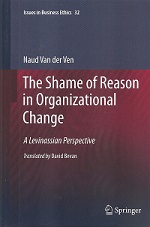
Last week The Shame of Reason appeared, the English translation by David Bevan of my book Schaamte en verandering. Right before the holidays, just in time for all those Englishmen, Americans and Australians who on their beaches en masse start reading the book.

Nonsense of course, but perhaps the ‘just-in-time’ may hold with regard to a quite different trend that occupies the media: the impending demise of the traditional booktrade. Within a few years from now, such a book as mine might not find an editor anymore, at least for a paper edition.

Everywhere I hear sad news from the side of publishers and bookshops. In Holland sales of general books shrank in the last five months by 3.8 percent and 4.7 percent in 2010. Publishers delete jobs and titles and join with one another in order to survive. Bookstores are struggling and cut staff. The book-selling markets which are currently best performing are those at the petrol station and supermarket. As causes for this development are mentioned the digitization, the economic crisis and the trend that people read less and less.

Do I myself get sad because of this trend?

Well, if the trend would stand for the demise of interesting ideas that are being well expressed, I certainly would, because I can not easily do without. And indeed, the traditional publishers and bookstores are precisely the places where one can find that. There one may even physically enjoy the nice combination of style and thinking, with or without a cup of coffee. But the question is whether those physical places are really essential and whether good writing in electronic form cannot as well meet my needs.

My gloom is even further relativized because I, frankly, never was a fan of strict literary bookshops, of the psychological novel "as a pillar of our literacy" (Maartje Somers) and of the cliques that go with them. As for me, I am rather sympathetic to those who, as Theodore de Boer recently described with respect to the Dutch poets of the fifties, radically break away from an age-old tradition of adoration of letters. Which break in the vision of De Boer is also a departure from Platonic metaphysics and classical aesthetics.

What remains is that I am pleased with the print publication of my book. Actually I have the best of both worlds, because the full electronic version is already available at the same time.

dinsdag 31 mei 2011

Everybody CEO


I want to expand a bit on the observation of a paradigm shift by which I concluded the previous message. Because that is quite a thing, a suchlike overturning of values, through which what was low-valued acquires more respectability: the real work, the trivial. If it were true, of course.

Confirmation of this trend may be found in the book Everybody CEO by Menno Lanting. In the book the author elaborates on the said paradigm shift, from contempt to appreciation for ordinary work, but now with the focus on organizations. He indicates the implications of this shift in the way we talk about work, leadership and management.

The impact of this shift may in fact be very large. Because the high esteem which traditionally exists with respect to thinking, overview and policymaking was always accompanied by a prestige for a certain - rather narrowly conceived - form of leadership and concomitant reward. That can not continue of course, once you call ‘everyone CEO’, because who is going to pay for that? Moreover, if you take seriously that slogan, then the monolithic image of The Real Leader pulverizes into many images of leadership, because then anyone can be one.

Then a leader is no longer necessarily dominant, or to be found at a distance from work, or heroically taking his the difficult decisions in utter solitude. Then leaders, as Lanting says, suddenly are to be found in the middle of organizations, close to the workfloor. Then it might be that the same people are leaders in one situation and followers in another.

Then it becomes conceivable that more leaders arise like Jos de Blok of a Dutch Neighbourhood Care organization who mentions as his main concern “that I don’t make my own role and position too big. I keep talking about ordinary things and professional content. I’m not really into management and management language and prefer to talk about client situations and the problems that professionals encounter. My assumption is that everything can be solved in the teams. This makes me to have the least (management) consulting as possible”.

This is truly revolutionary. Paradoxically, it means that we (temporarily) still need to rely on the heroic leadership which traditionally is in so high esteem. Indeed, there should be somebody to reduce the number of management meetings, to cut out overhead and to eliminate the woolly language in which we imprison each other. In short, to saw off the branch on which he sits. For a while there is still room for (very) heroic managers.

dinsdag 12 april 2011

Megatrend


The transition from bondage to freedom, is it a jump, or even an absolute break? Or, to put the question differently: a bit more freedom, is that possible to exist once you've got a taste of freedom? Or is a bit more freedom something like being a bit pregnant? Something that does not stop until the freedom or the fruit matures?

That question may be posed in response to the rebellions in North Africa. Are the ghosts completely out of control, will the insurgents in Tunis, Cairo and Benghazi still accept anything less than full democracy and participation? Or is there space left for a half-half situation, for a little more freedom within an autocratic framework?

So, for example, for a little more freedom in a state still run by the military, as now in Egypt. Or for greater involvement of the people while maintaining a powerful and popular king, as in Morocco. Or, as in China, for a bit of freedom in combination with rapid economic growth under an authoritarian party.

Or would half-half not last and should one radically march on? Have the Chinese leaders reached the borders of their ability to keep stupefying their population’s drive for freedom by offering prosperity and will they therefore have to allow more freedom? Will the Egyptian army have to give in to radical freedom-loving forces in the country? Or, if half-half is no option, are they going to choose, as in Iran, for completely stifling all freedom?

Closer to us in Western Europe the above question may be posed as well, be it that, fortunately, we know less physical and statedriven violence. And, another difference, I want to apply the question to the leadership in our companies. There we used to have directive and more or less top-down ways of leadership, but does that still work well? There is a growing number of voices that think it does not work any longer as a standard approach.

Carney and Getz for example state in their book Freedom, Inc. that the hierarchical model has run out. According to them the future belongs to companies that give their employees the freedom to do their job as they think it should be done. Because otherwise these freedom-loving people just walk away. Knowledge workers can not be managed in a controlling manner. The task of the leader is merely to create optimal acting space for his employees.

Another radical sound comes from Alan Murray. In his view managers are only a barrier to the full deployment of their employees and the prosperity of a company. "Their fundamental tendency is to maintain themselves. They are, almost by definition, averse to any change". Moreover, the younger generations don’t let themselves be commanded by parents or bosses. They listen to whát is being said. Not for nothing many people choose a position as worker without fixed tenure.

When you view the radicality of these statements, the opening question of this piece comes up again: once you have smelt freedom, will you not be at odds with any authority? Or is there space left for mixed forms of the authoritarian and the democratic, of hierarchy and freedom. Can these styles co-exist, or has the unfettered, free knowledge worker unmasked the manager as being a conservative potentate in such a way that the two are no longer compatible? That would mean the end of management. If so then we are living in historic times and experiencing a mega trend in both North Africa and in our own organizations.

But, to be honest, I think we must be prepared to manage with the hybrids. Complete freedom, both in North Africa and in our organizations, is something we will have to wait for a little longer. I feel strengthened in this thought – as far organizations are concerned – by a newspaper article that emphasized the indispensability of the organizational controlmodel. It was about the Belgian juridical system which had failed in an investigation into the murder of a student. The report on the police action can be read as a tribute to classical bureaucratic management because its absence is identified as the cause of failure: there was "no team manager, no file manager, no coordinator, (...) no structure, no information management, and leadership was absent. All this could be read as the chronicle of an announced failure".

Also see Must work be fun

donderdag 30 december 2010

Grief


The words ‘grief’ or ‘violence’ or ‘pain’ do not belong to the vocabulary of organizations. Because there grown-ups work together based on mutual consent and rational alignment. That’s what I sometimes hear from participants in my workshop Thinking for someone else, in which I – in the footsteps of the philosopher Levinas – regularly use those words, even if we discuss work situations. My answer is that some words may indeed sound strange in the context of organization and management, but that they really can tell us something about that reality. And that time may be ripe for a variety of unusual word connections.

As to that latter thought I feel strengthened by the publication of the book The judge’s new clothes by the Dutch judge Rinus Otte. Because the book calls forth a number of unusual associations. Of judges with misery, of organizations with grief, of management with being pathetic. These unusual connections are there already for some time, so Otte suggests, but something in our minds keeps us from associating the said things with one another.

The association of judges with misery gets profile only relatively recently. Namely, Otte tells us, since judges are locked up in planning and control cycles in which targets are fixed and results are measured. Because much of their work processes are standardized, judges from a center point turned into a link in a chain. They have little grip anymore on the organization of their daily work. The juridical process is planned for them, not by them. The thinking is being done for them, and thus they started to show increasingly dependent behavior. They started to make one another’s lifes a misery and to complain a lot, especially about the workload, says Otte.

That’s pretty miserable indeed, but – according to Otte – no more pathetic than the fate of many other professionals, because the planning and control bureaucracy has raged almost everywhere and made people mellow. That of course makes it no less severe, as the malaise now almost gets the features of a genuine cultural crisis.

The words organization and grief seem to stem from two incompatible vocabularies. Organization stands for ultimate rationality and functionality. There may be some links with the realm of emotions, but these connections are subject to strict censorship. Emotions in that context should invariably radiate positivity and enthusiasm and be about connectedness. The association of organization as a reasonable concept with grief keeps feeling uneasy, but Otte makes clear to what extent that association within the administration of justice is identifiable. The Dutch paper NRC reports that Otte was baffled about the “unhappiness” and the “organizational violence” that he encountered at his court (and, appearing from his quotationmarks, the reporter found it strange words a well in this context).

Something similarly uneasy applies to the coupling of managers and being pathetic. According to the prevailing perception managers are still mainly associated with vigor, coolness and, again, reasonableness. Yet, however often the words energy and charisma and connection may be used in those circles, Otte’s book makes quite clear, according to the NRC, that management of the criminal process is mainly rather tiresome. “Tensions have grown over the last five to ten years” and “What you see is a lot of communication between deaf, people don’t reach each other”.

The interesting question, of course, which lays behind those uncomfortable associations is: what makes our brain to take one kind of associations for granted and to find other kinds of associations odd, even though reality offers us many reasons for such an unusual association to be made? To be continued.

Also see Bauman, Levinas and business ethics

zondag 10 oktober 2010

La trahison des clercs


As openly expressed as recently by the Dutch Reverend Bas van der Graaf one does not find it easily. When well-educated smart people come to church, according to him, then this is for simplicity and for having something to hold on. They live in a complex, hectic world and their greatest need is: quiet. That’s what they look for in the church and then they do not want to be treated to difficult topics. They're not in for challenging thought.

Indeed, they have enough of that already, says Van der Graaf. And I agree with him, I may watch in wonder how much thought and ingenuity is being invested in financial products, legal acquisition structures, scientific research, audio equipment and even football formations.

And apparently then it’s all used up. “Highly qualified church-goers don’t like lectures on difficult topics”. They intuitively know very well that the world is bigger than what they do in their jobs, and they try to make space for that surplus, but please let that cost no additional mental effort.

This attitude is nothing new in Christianity. On the contrary, it stands in a tradition in which silent contemplation is more valued than sharp, substantial debates; in which submission and simplicity are “celebrated”; and in which the idyll of monastic communities should not be disturbed by critical reflection on potentially unhealthy tensions within.

In the last resort, moreover, that tradition does not allow to question the possibly shaky nature of its own foundations. Of course one may have reasons to take that position, namely the reasons Van der Graaf adduces for this: he and his fellow highly educated wish to have quiet in the house. But intellectually spoken one pays a price for ones rest.

This refusal cannot as easily be reconciled with intellectual acuteness as Van der Graaf suggests when he says that of course some things should not be meddled with. Compared to this the Remonstrant pastor Leegte, in an answer to Van der Graag, is a lot brighter. “If only one of my braincells is not allowed to participate in my work as a pastor”, he says, “then I’ll look for another job”. That very braincell might well have problems with the "realities" of Van der Graaf, such as the crucifixion, resurrection, Pentecost, the work of the Holy Spirit.

The refusal to use that one braincel is of course everybody’s own prerogative. And by that refusal you even may attract very dedicated people with brains into your church, as Van der Graaf says. But I am afraid the internal intellectual debate will not easily rise above the average level. Really critical questions about our living together, critical reflection which directly affects our professional behavior, all that remains half-baked. That flawed intellect was once referred to as “la Trahison des Clercs”. More recently - and with better answers than Benda - Huub Oosterhuis referred to that issue by asking the question: “If you are so smart, why don't you think more about how we live together?”