vrijdag 19 december 2014

Another Judaïsm?


I’m Jewish, but often I wonder whether I belong to the same tradition as those who emphasize they are the chosen people and therefore claim the West Bank; or who dream of a Greater Israel; or who want to ban Muslims from the Temple Mount and, says former Mossad chief Shavit, in order to achieve that even want to risk a new destruction of Jerusalem and a new exile.

Anyway, I strongly disagree with these positions, and I’m inclined to see emerge in them the worst of what religion can be. In contrast, I would like to emphasize the good of the tradition to which I belong.

For me, the core of its focus is on learning. But saying this is not precise enough because, precisely in view of the excesses that I note, it appears that some forms of learning can be oppressive and meaningless. The good form of learning that I have in mind is contemporary learning that has a life-giving impact.

In the formative years of the rabbinical tradition (say, from the second to the eighth century CE) learning did have that constructive character. Such learning took the form of study of the traditional oral and written texts, with the intention to derive direction for the way the Jewish people could exist in those days. And that worked extremely powerful, thanks to the passion and intellectual ingenuity that were invested by the then rabbis.

Learning had impact. That’s in my view hardly the case with the descendants of those rabbis who ruminate their texts in jesjiwot. For them, it’s less about the struggle to obtain new answers – so about a creative, life-giving process – but rather about honoring the founders of the tradition. Therefore in my eyes they are victims of their own sacred cows, and not much inspiration radiates from that.

If we want Jewish learning in our time to have the same impact as the former rabbinic text analysis and discussion in their time, we will therefore have to find and deploy our contemporary forms. But if learning can no longer rely on text study and interpretation, what does contemporary, creative Jewish learning look like?

I believe that will be about our history. In the way Simon Schama learns and tells of the exile and Zionism. Or Bart Wallet about Dutch Jewry, or Leo Mock about the Jewish Middle Ages. Or, indeed, Josephus about the destruction of the Second Temple.

I search into that direction because of the effect I notice emanating from historians who manage to place all existing stories in a broad, nuanced perspective. That is beneficent and  space-creating, and thus guiding in a way that is similar to the learning of the rabbis.

Besides, I think the a-historical, classic study of fundamental texts not only for the Jewish tradition has had its day. That certainly applies also to Islam and Christianity. A-historical thinking is no option any longer, the turn is to multidimensional historical thinking.

That requires learning a lot indeed. But has Jewish tradition not always been good at that?

woensdag 17 december 2014

Nice and easy


There is a number of issues in the media that I can skip directly. And, if otherwise I have a tendency to spell the newspaper, that feels beneficial. These issues concern in particular sports and environmental matters.

Sports, because it does not interest me. So, especially on Monday I have relatively quickly finished with the newspaper. Nice and easy.

Environmental issues, because I think the importance of the environment is so evident that I can hardly generate any understanding or interest for the haggling or delay tactics employed left and right in this field.

Unlike delicate social issues such as income distribution, radicalization and integration – often with multiple historical dimensions – the direction we have to follow regarding the environment is clear-cut. There is nothing difficult about it. One can hardly be fast enough in closing coal plants, stopping the plastic soup, building wind turbines and installing solar panels.

At times I suspect my generation of thinking: After us the deluge. That’s very cynical of course. But that does not necessarily keep the next generation from saying, “The deluge? Never!”. And from using consequently, with strength and conviction, all resources that are available already for a long time to turn the tide.

vrijdag 12 december 2014

David Pinto


If I were David Pinto I would have turned it around. Pinto wrote last week in Trouw: “Islam can learn something from Judaism”, and then wonders whether presenting the Jewish tradition as an example to Muslims would not easily go the wrong way.

It’s true: there are many punishments in the Torah which can be described as barbaric and which were abolished as a prescription. For example, the punishment of stoning of a Jew who does not respect the Sabbath, no Jew would get it into his head to apply that. Unlike the gruesome punishments that are actually executed by Muslims today, to fellow Muslims and others.

But a lot of the other things that Pinto designates as negative in Muslims are indeed also to be found in (ultra-)orthodox Jews. Think of gay hate, misogyny, or hatred of everything non-Jewish.

This makes Pinto's argument a bit weak. Apart from that, in fact it sounds rather pedantic to set your own tradition as an example to others, even though he’s partly right.

Therefore, I am inclined to turn it around. By this I mean that I would not in an offensive manner shout “Look at me!”. But instead I would keep ready the argument of the de facto abolition of barbaric punishments for the situation that bystanders put away the Jewish tradition as primitive and barbaric, for example, with reference to “all the violence and primitive laws in the Torah”. At such time, the answer is in place that Pinto gives: look how is dealt with it, that no longer exists in practice.

And if then someone says “But what about all the violence in Israel?” Then it is sufficient to let the Torah out because there are already enough ‘normal’ historical explanations for the tragic situation: two traumatized peoples colliding in the same region, an unequal balance of power, geopolitical interests.

But unfortunately – also for Pinto – we will also have to admit that unnecessary, additional hardening of the conflict is caused by a hard core of settlers who actually take their inspiration from the Torah.

Also see ‘Moderate’ is abusive language

donderdag 4 december 2014

National Thinkshame


The phenomenon ‘thinkshame’, on which I give workshops, can not be explained simply. It often takes quite a bit of effort to get the phenomenon into the limelight, though I now know that stories of participants about their own experiences with it have the greatest enlightening effect.

But at this moment in my attempts at explanation I am societally down the wind, because thanks to the national Dutch Blackface discussion it is easier to recognize the phenomenon thinkshame, as well as the strength of its impact.

As a starting point for this piece I take the elusiveness of the discussion and the irritation it evokes with many people. By this I do not refer to the irritation of pro-Blackfacers and anti-Blackfacers about each other, but to the annoyance of many that such a discussion exists anyway. As Bas Blokker wrote: “In every conversation about Blackface there comes a time when someone says: ‘What a drag this is, let’s talk about something really important. I do not understand why we make such a fuss about it’”.

And it’s true, in such a case as the Blackface issue no major financial, economic or geopolitical interests are at stake. But yet as a consequence of the fuss people are arrested at the arrival of St. Nicholas, death threats fly back and forth, and the issue is being assessed by the Board for the Protection of Human Rights against the Equal Treatment Act.

If the issue is really that unimportant, Blokker wonders, why tempers run so high? At this point, the phenomenon thinkshame has a remarkable explanatory power. Because what happens if you let yourself get caught by other people’s grief and if you are embarrassed about the initial enthusiasm of yourself (for example, for that cozy, old-fashioned Blackface you know from your youth) – what happens then is not necessarily reasonable.

Anyway, that shame is not reasonable, because what’s wrong with the propagation of love for a popular custom? There máy be something wrong with this, so thinkshame tells us. Good intentions are not always decisive. You may have your good ideas and good intentions. But all that has no value anymore at the time that someone else is hurted by them, and you in one way or another are convinced of the authenticity of that injury. Than the other suddenly determines your playing field, even if it is – for your feelings – nothing about. There you experience a certain loss of autonomy. Yet it does not feel wrong, since there is réal contact.

But if then you start acting according to that shame, and you’re going to actively work for change of the custom in question, then the issue of the proportionality and reasonableness of your actions continues to arise. What you do then cannot always adequately be explained by the primary content of the issue. On the contrary, a sense of disproportion can keep accompany you.

Both issues – the strange shame and the subsequent action, which sometimes feels as exaggerated – can only be explained by the fact that you’re touched by the sorrow of someone else, precisely about something which you think is so nice. Any different reasonableness ricochets off at that. Blackface = black sorrow. That shock – that’s the essence of thinkshame.

For example, as writer Robert Vuijsje puts it in an interview. Vuijsje is known as an abolitionist, he wants to abolish Blackface and when he is asked the question: “Your wife is  black and your children are colored, when did you think: Blackface is not done any longer?”, He replies: “My eyes opened when a year ago I saw the Antillean Dutch artist Quinsy Gario being addressed on TV. I had never before seen my girlfriend – she has Creole parents – as truculent as on this subject. Not long afterwards I called the only black kid in my class at primary school. I even sat next to him. Whether he was called Blackface, those days, and whether he hated the St. Nicholasfestival. Yes, he said. I had never noticed. I realized then that it is not about how Í experience and have experienced it, but how black people experience it”.

In this way, the strange – however annoying – suddenly becomes clear enough.

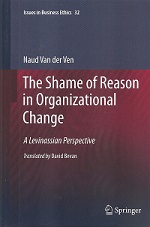
Also see Summary of The Shame of Reason and Something small

donderdag 27 november 2014

Incentives


I do know Israel - for travel - and that pleased me. I do not know the country as a resident, and I wonder how I would like that.

At this time that question is triggered by my rereading passages from the book My promised land by Ari Shavit about which I previously reported. Especially tickling are the passages referring to the Israeli food giant Strauss, by the twinkling intensity of Israeli society that resounds in it.

Shavit: “Israel is a country that is quickly excited; Israelis therefore have need for more and more incentives. The Strauss-team understood that this also applies to the taste of food. They realized that the Israeli savory snacks had to be much saltier than American snacks and confectionery much sweeter than the European. Chocolate was to be much more chocolate-esque and vanilla much more vanilla-esque. Nuances in Israel were not appreciated: everything had to be powerful and extreme and caress the palate with strong aromas. For an example, the Israeli Milky contained twice as much cream as the German example. But the Israelis do not want just more, they also want continuously something new. They are quickly tired of something. For that reason, Strauss replaces its products much faster than its European sister companies”.

That this lust for excitement does not necessarily have to lead to flatness and insipidity, appears from the development of Israeli dance. Which also is largely driven by basic physical stimuli, but at the same time manages to achieve a high level of artistry. Israeli dance is not so much focused on beauty, it is more about gouge: impulses from the body, and bare feet instead of spitze.

Intuition and feeling, these are according to experts the basis of Israeli dance. The drive of the dancers, their great technique, the inner need that expresses the choreography – they are constants in Israel’s young dance history, which make Israeli dance at present internationally into a success story.

The choreographer Guy Behar explains the strength of this dance tradition from the social situation in Israel. “The context in which we operate is dynamic, turbulent”, he says. “You never know what will happen. Every moment the situation can change. If you have something to say, you should say it now. That inner necessity and immediacy can be seen in almost all the work”.

Yes, this artistic and communicative dynamics definitely does have something stimulating and that appeals to me. But at the same time I would find all that a bit too raw. Furthermore, I doubt whether I’m not too stress-sensitive to live permanently in a war situation. I actually think I cannot manage that. Rather, to me applies what the former CIDI Chairman John Manheim once said of himself: that his nervous system did not allow him to live in Israel.

But as great a problem for me would be that the provocative dynamics of cultural and economic life in Israel stands out quite shrill against the lukewarmness and indifference exhibited by the majority of the Israeli population when it comes to a peace settlement and the treatment of the Palestinians. An attitude that so perfectly, and not coincidentally, is embodied by the absolute-non-dancer Netanyahu. Actually incomprehensible.


woensdag 12 november 2014

'Moderate' is abusive language


Whoever tries, amidst gruesome images from the Middle East and Islam debates in ones own country, to get some grip on the phenomenon of ‘Islam’, may easily get discouraged. Because the conclusion is swiftly made that Islam is what ones interlocutor from that moment wants it to mean.

Do you speak with IS-supporters, or read their statements in the newspaper, then you hear that ‘Islam’ means Sharia in its most severe form, slavery and death to infidels. Do you speak with indigenous Muslims, you hear that ‘Islam’ means peace. And then you hear all the variations somewhere in between.

So, in the end you don’t get a fixed story, no clear picture of this religious tradition, but perhaps that’s too much to ask. Probably people like Nuweira Youskine are right, who say the Quran is not an Ikea instruction. There is no single interpretation of Islam which is thé right one, just as there are different views on Judaism and Christianity.

On the other hand, in the images that Muslims sketch of their tradition is quite a number of elements that keep returning. So that one could decide that these things belong inseparably together. Two of them I pick out here: first the idea that the Quran is the literal text of God and, secondly, that the word ‘moderate’ in broad Islamic circles seems to have a negative connotation.

According to tradition, the Quran came word by word and letter by letter directly from Allah and has been recorded by Muhammed without any modification or addition. That makes the idea unthinkable for Muslims that there could be several different versions of one described event comparable to the four Gospels in Christianity or the two creation stories in Judaism. It also makes, in Muslim eyes, the Quran superior to those other texts and explains why the Jewish and Christian traditions are burdened by revisions, reforms and dilution of their own doctrines. In them there’s noise on the line because of the ambiguity of their texts, and the Quran is free from them.

The second observation refers to the word ‘moderate’. Remarkably often I hear that word, which to me is known as having a fairly positive connotation, be used by Muslims in a negative sense. For example, in a letter to the editor in which Nabeel Siddiqie discusses the usual rejection by correct newsmedia of fundamentalists, extremists and jihadists. “Conversely”, he says, “ordinary, in my eyes real, Muslims are dismissed as moderate Muslims. As if you need to be moderate in your faith in order to fit into Dutch society. I cannot but conclude, given the definition of the word Islam, the conduct of the Prophet Muhammed and the teachings in the Quran, that I belong to the group of fundamentalists, extremists and jihadists”.

Another example is provided by the The Hague shop assistant Jamal Saïdi who puts his biggest complaint as follows: “They want everyone to be moderate”. Or Montasser al De’emeh of the Research Group Middle East from the University of Antwerp, who twitters about someone accused of crimping for the Jihad: “He interprets his religion in a radical way. That’s it!”. So, nothing special. Finally there is the response to the Dutch version of my blog post Alcoholism and Jihad: “There is only one Islam and that is Islam as stated in the Quran, hadiths and sirat. There are no muslims who call themselves “MODERATE”, this is an invention of Western politics. If moderate Muslims would exist there should also be something to MODERATE. What could that be?”

Frankly, I think the negative load of the word ‘moderate’ in Muslim circles is problematic. If only notions like ‘purity’, ‘absolute surrender’ and ‘complete submission’ may indicate the orientation of a Muslim, what to do then with the grubbiness and compromises out of which a free society is built?

Also see Alcohol

woensdag 5 november 2014

Levinas and Kahneman


The psychologist Daniel Kahneman had just graduated when in 1955 as a conscript into the Israeli army he was commissioned to set up a new interview system for the entire army. The interviews were meant to produce a picture of the recruits and to judge whether these were suited for the officer training.

The existing system did no longer satisfy, because it gave the interviewers freedom to do what they found most interesting, which was to learn about the dynamics of the spiritual life of the interviewee. Ánd because the overall assessment of the recruit by the interviewers was decisive for the final decision, while scientific evidence indicated that such assessments were unreliable.

Kahneman attacked both objections. Instead of free interviews he opted for standardized, factual questions. And instead of interview summaries he preferred statistical summaries of seperately assessed characteristics of the recruit. The final score for fitness for combat tasks would be calculated using a standard formula, without further interference by the interviewers.

In his book Thinking, Fast and Slow Kahneman justifies his choices as follows. “By focusing on standardized, factual questions I hoped to fight the halo effect, whereby favorable first impressions affect judgments later on. I told the interviewers that they did not have to worry about the future adjustment of the recruit to life in military service. Their only task was to get the relevant facts about their past and to use that information to score each personality dimension. ‘It is your job to provide reliable data’, I told them. Just leave the predictive validity to me’, by which I was referring to the formula that I would draft to combine their specific scores”.

Then he continues: “Among the interviewers an uprising almost broke out. These intelligent young people found it hard to accept that they were instructed by someone who was barely older than they were, to turn off their intuition and to concentrate fully on dull factual questions. One of them protested by saying: “You make robots of us!” That’s why I came up with a compromise. “If you do the interview exactly as I have said, then I will satisfy  your desire: then close your eyes, try to imagine the recruit as a soldier and give him a score on a scale from 1 to 5.”

The new interview procedure proved to be a significant improvement with respect to the old one. The sum of the six ratings predicted performance of the soldiers much more accurately than the summary reviews of the previous interview method, although still far from perfect. They were advanced, says Kahneman, from ‘totally useless’ to ‘somewhat useful’.

At the same time Kahneman observed, to his surprise, that the intuitive judgment formed by the interviewers at the time of the closed eyes, also satisfied very well, even as well as the sum of the six specific scores. He tells: “A general lesson I took from this episode was that one should not just rely on intuitive judgments – either of yourself or of others – but also that one should not automatically reject them.”

The question I ask myself in this story of Kahneman is: does the blindfolded intuition actually  function as a sop? Doesn’t he actually believe it? Should employees just accept that formulas are used and that they can not develop their creative involvement?

Kahneman is skeptical indeed. He believes that we in general grossly overestimate our own intuitive skills and expertise and human knowledge. And that therefore sober observations and measurements which are laid down in algorithms and formulas are preferable. Regardless whether it comes to the assessment of recruits, the prediction of wine prices or valuation of a painting.

Such a view easily provokes the kind of resistance that we already encountered above: “We are made into robots!” What then remains of our highly personal individuality and creativity? Do not our lives become dull and impersonal?

I do understand the resistance, but yet I tend to share Kahneman’s view. The reason is that  I am sufficiently soaked in the skepticism which also Levinas displays opposite the euphoria of the highly personal thinking which is so pleased with itself but permanently produces illusions. However much the glorification of the creative individual fits into the romantic society we still are, Levinas’s and Kahneman’s skepticism thereabout is very much in place. So, let Kahneman use his sop, because we can do without a lot of our self-righteous euphoria.

What can nót miss is a different kind of vividness. Namely that of the authentic encounter with another human being or beings. I even think that fulfillment of that desire can make redundant a lot of overly focused attention on individuality in our society. When it comes to that deficit Kahneman leaves us, apart from the sop, empty-handed. Because he speaks little about such encounters between people.

Levinas even more.

Also see Levinas and Empathy